
Four Visits a Year: How the Baker Brothers Family Plan Home Health Report Works
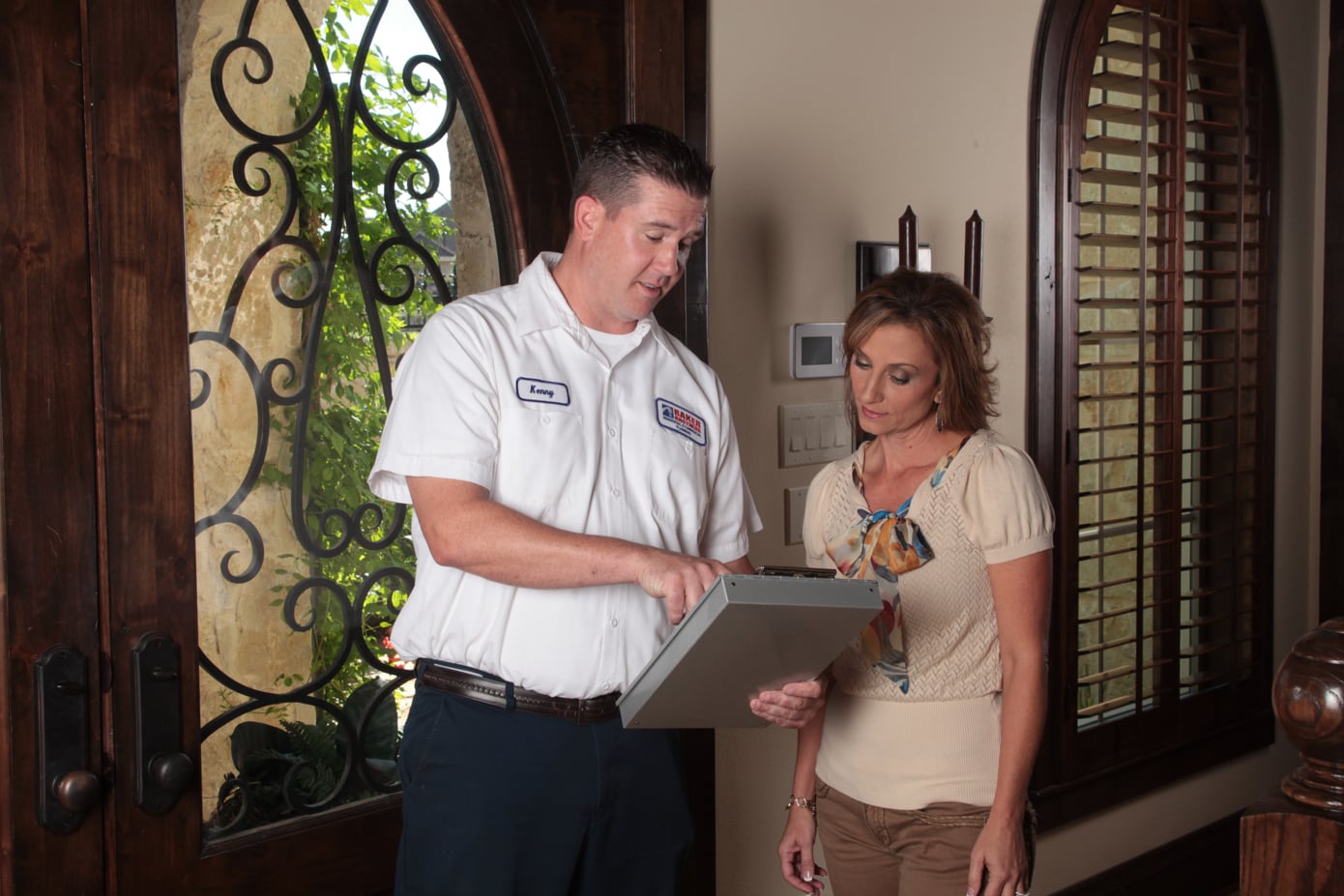
TL;DR: A Baker Brothers Family Plan membership includes four maintenance visits a year (two HVAC maintenance inspections, a plumbing maintenance inspection and an electrical safety inspection). After each one, the technician leaves a Home Health Report that rates every item it covers green (in good condition), yellow (needs attention soon) or red (requires attention now). Nothing on the report gets repaired until you agree to it.
What Comes With Four Family Plan Visits a Year?
The Baker Brothers Family Plan is a monthly membership that covers your heating and air conditioning, plumbing and electrical systems. Each membership year includes four visits.
- Two HVAC maintenance inspections: one safety inspection and one performance tune-up of the air conditioning and furnace.
- Plumbing maintenance inspection: a visual safety inspection of the kitchen, each bathroom, the water heater, the washing machine valves and the plumbing and gas pipes.
- Electrical safety inspection: the main panel, arc fault breakers, GFCI protection, interior outlets, smoke detectors, lighting, timers, surge protection, plugs and switches.
The visits are included with the membership, which costs $14.99 a month for a home with one to three HVAC systems or $19.99 a month for four to six. If you own more than one property, the multi-home plan covers up to five homes for $34.99 a month. Members also get priority scheduling and 15% off repairs, up to $2,500.
Every membership starts with a 12-month term and then renews month to month. The Family Plan page lists every benefit, and the full terms are on the Family Plan terms and conditions page.
Baker Brothers sends a reminder when a visit is due, so the schedule doesn't depend on anyone remembering it. For a busy household, that means one company, one calendar and the same written report for every system in the house.
What Does a Baker Brothers Home Health Report Look Like?
A Home Health Report is a one-page checklist the technician fills out during the visit and leaves with you. There are three versions, one for each trade: the HVAC Home Health Report, the Plumbing Home Health Report and the Electrical Home Health Report. Both HVAC visits use the HVAC report, so a full membership year gives you four reports.
Every report rates each item on the same three-color scale: green for In good condition, yellow for Needs attention soon and red for Requires attention now.
The top of the page records the date, the service performed, the outdoor temperature and your technician's name. Equipment details come next, such as the make and age of your water heater, furnace or electrical panel. Those are easy to lose track of, and they're the first thing anyone asks for when a system needs a repair or a replacement quote.
Each report also takes a quick look beyond its own trade. The plumbing report includes a visual check of the heater, coil, ductwork and electrical panel. The HVAC report covers the water heater and the panel. The electrical report covers the water heater and the HVAC breaker and disconnect. So a plumbing visit can still flag a problem in the electrical panel.
The bottom of every report lists Baker Brothers' Texas license numbers for plumbing, air conditioning and electrical work, with signature lines for you and the technician.
What Does the HVAC Home Health Report Check?
The HVAC report is the most detailed of the three. It’s used at both HVAC visits each year, the safety inspection and the performance tune-up, and it covers the outdoor unit, indoor unit, evaporator coil, attic and indoor air quality.
- Outdoor unit: make, model, age and SEER rating; refrigerant type and pressures; power and control wiring, breaker and fuses; contactor; condenser coil cleaning; outdoor fan motor; compressor and starting amps; and the temperature drop across the system.
- Indoor unit: make, age and AFUE rating; temperature rise; burners, ignition and a cleaned flame sensor; heat exchanger; a test for gas leaks at the furnace; the exhaust system; safety switches; inducer and blower motors; and thermostat calibration.
- Evaporator coil: cleanliness, primary and secondary drain pans, the flood prevention switch and whether the drain line can be serviced.
- Attic: duct type and whether the ducts are properly hung, duct insulation and how the ducts are sealed, attic insulation level, ventilation and dampers.
- Indoor air quality: filter type and size by MERV rating, fresh air ventilation, UV light or air purification, signs of microbial growth in the plenum and zone controls.
Because both visits are recorded on this report, you get two snapshots of the same system each year, making it easier to spot a part trending toward failure.
“When I’m inspecting an HVAC system, I’m looking for things like dirty condenser coils, aging electrical components and ductwork in poor condition. Those problems may not shut your system down today, but over time they can hurt efficiency and lead to bigger repairs. That’s why I like the Home Health Report. Homeowners can see exactly what’s going on with their system and deal with small problems before they get expensive.” - Matt McFarland, HVAC Technician, Baker Brothers
For more on single-system visits, see AC maintenance inspection and furnace repair and maintenance.
What Do the Plumbing and Electrical Home Health Reports Check?
The plumbing report follows the water through the house, from the meter to every fixture.
- Water heater: location, type, age and last service date; venting, drain pan, gas valve and supply, electrical disconnect, temperature and pressure relief (T&P) valve and anode rod.
- Bathrooms, up to four on one page: each faucet, drain, toilet and shower, the emergency water shut-off at each fixture and the bathroom GFCI outlet.
- Kitchen and laundry: faucet, garbage disposal, drainage, ice maker shut-off, washing machine hoses, dryer vent and dryer gas supply.
- Outside: water meter box, the main water riser and its shut-off, hose bibs, sprinkler backflow prevention, home water quality and water pressure (PSI).
- Water filtration: a water test and a check of any reverse osmosis or whole-home filtration system.
Shut-off valves show up in almost every section. Knowing that each one actually turns is worth a lot when a supply line lets go at 2 a.m.
The electrical report starts at the panel and then goes room by room.
- Panel: location, make, age and last service date; main breaker; grounding; water and gas bonding; sub-panel; breaker temperature; surge protection; arc fault test; service entrance and meter; and an EV charger or generator if you have one.
- Room by room: light switches, smoke detectors, breakers and outlets, each rated on the same green, yellow and red scale.
- Overall score: a 1-to-10 rating for what the report calls the home's "electrical heart."
Panel make and age matter most in older DFW homes. Some panels installed decades ago, including Federal Pacific and Zinsco models, have known safety problems. See how to spot recalled panels and the electrical safety inspection page.
How Do You Read Green, Yellow and Red on a Home Health Report?
Green means the item is working the way it should, yellow means it needs attention soon and red means it requires attention now. Here's what to do with each one.
Rating | What it means | What to do |
|---|---|---|
Green: In good condition | Checked and working the way it should. | Nothing. It's marked so you know it was looked at. |
Yellow: Needs attention soon | Wear, age or a part trending toward failure, but not urgent today. | Ask how soon "soon" is. Plan it for a set date or the next visit. |
Red: Requires attention now | A safety concern or a part likely to fail. | Have the technician show you the problem and give you a written price before they leave. |
The green marks count as much as the red ones. A report that shows what's fine tells you the technician checked the whole system and wrote down what they saw.
A yellow rating gives you time to decide. Because the next visit produces a new report, you can watch a yellow item and see whether it's holding steady or getting worse.
“The Home Health Report isn’t just about pointing out what’s wrong with your system. Green ratings are just as important because they show what’s working properly. Yellow means something may need attention down the road, and red means there’s a more serious problem that needs to be addressed. Our goal is to give homeowners the information they need to make good decisions about their homes.” - Roger Frosini, Vice President of HVAC, Baker Brothers
What Happens After the Technician Hands You the Report?
Nothing on a Home Health Report gets repaired until you decide. Every report ends with a short service agreement and two choices: agree to service within a timeframe you write in, or decline service at this time.
If you go ahead, the technician shows you the problem and puts a firm price in writing before any work starts. Family Plan members get 15% off those repairs, up to $2,500.
Declining is a real option, and so is picking a date three months out. A yellow anode rod in the water heater can go on next spring's list. A red gas leak at the furnace can't wait.
Keep every report. Four a year add up to a record of each major system in the house: what was checked, when and what changed. That history helps when an aging system has you weighing repair against replacement, and it's useful paperwork when you sell.
If something on a report gets worse between visits, call. Baker Brothers dispatches technicians for genuine plumbing, HVAC and electrical emergencies 24 hours a day, every day of the year, and Family Plan members get priority scheduling. Repairs are backed by Baker Brothers' make-it-right guarantee.
Already a member? Schedule your next visit and ask your technician to walk you through the report. Not a member yet? See what the Family Plan covers.
Frequently Asked Questions
How many visits a year come with the Baker Brothers Family Plan?
The Family Plan includes four visits a year: two HVAC maintenance inspections (a safety inspection and a performance tune-up), a plumbing maintenance inspection and an electrical safety inspection. The technician leaves a Home Health Report after each one.
What do the colors on a Baker Brothers Home Health Report mean?
Green means in good condition, yellow means needs attention soon and red means requires attention now. Every item the technician checks gets one of the three ratings.
Do I have to fix everything on my Home Health Report?
No. Each Home Health Report ends with a choice to schedule service within a timeframe you pick or to decline for now, and no repair starts until you approve a written price.
How much does the Baker Brothers Family Plan cost?
The Family Plan is $14.99 a month for a home with one to three HVAC systems and $19.99 a month for four to six. The multi-home plan is $34.99 a month for up to five homes. Memberships start with a 12-month term and then renew month to month.
Does the Family Plan cover repairs?
No. The four visits are inspections and limited maintenance, and repairs are priced separately. Family Plan members get 15% off repairs, up to $2,500, plus priority scheduling.
What's the difference between a one-time HVAC tune-up and the Family Plan?
A one-time Baker Brothers HVAC tune-up is $79 per system and covers one visit. The Family Plan covers two HVAC visits plus a plumbing and an electrical inspection each year, with a Home Health Report after every visit, priority scheduling and a member discount on repairs.
About the Author
Roger Frosini is VP of HVAC at Baker Brothers Plumbing, Air & Electric, a licensed plumbing, HVAC and electrical contractor serving the Dallas-Fort Worth metroplex since 1945. He joined the company in 2013 to launch its HVAC division and now oversees heating and air conditioning service across its Dallas-Fort Worth locations. Roger brings more than 40 years of home services experience, having grown up in his father’s HVAC and construction business and later owning and operating two HVAC and construction companies in the DFW metroplex. He holds a Texas ACR license through TDLR along with EPA Section 608 and NATE certifications.
Methodology
This post describes the Baker Brothers Family Plan as published on bakerbrothersplumbing.com as of October 2026 and the HVAC, Plumbing and Electrical Home Health Report forms Baker Brothers technicians use during member visits. No competitor data or third-party pricing was used.
Sources & Further Reading
- Baker Brothers Family Plan, Baker Brothers Plumbing, Air & Electric
- Family Plan Terms and Conditions, Baker Brothers Plumbing, Air & Electric
- HVAC Tune-Up Special, Baker Brothers Plumbing, Air & Electric
- AC Maintenance Inspection, Baker Brothers Plumbing, Air & Electric
- Plumbing Inspection, Baker Brothers Plumbing, Air & Electric
- Electrical Safety Inspection, Baker Brothers Plumbing, Air & Electric
- Is My Electrical Panel a Fire Hazard?, Baker Brothers Plumbing, Air & Electric
- Warranties, Baker Brothers Plumbing, Air & Electric
